
Imagine walking into a hospital a decade from now. You don’t just meet a doctor; you meet a team. This team includes your doctor, a nurse, and a silent, incredibly powerful partner: Artificial Intelligence (AI). This AI has already reviewed your medical history, analyzed your latest scans with superhuman precision, and suggested a treatment plan tailored specifically to your DNA.
This isn’t science fiction. It’s happening right now.
Artificial Intelligence is quietly revolutionizing healthcare from the inside out. It’s not about unfeeling robots replacing compassionate doctors. Instead, it’s about giving our medical heroes a powerful new set of tools to do what they do best: save lives.
In this article, we’ll break down exactly how AI is changing medicine. We’ll skip the confusing jargon and focus on real-world examples. You’ll learn how AI is helping to:
- Detect diseases like cancer earlier than ever before.
- Create personalized treatments just for you.
- Speed up the creation of life-saving drugs.
- Make hospitals run more efficiently, so you get care faster.
Let’s explore the incredible ways AI is becoming healthcare’s most valuable new partner.
What Is AI in Healthcare? (Let’s Keep It Simple)
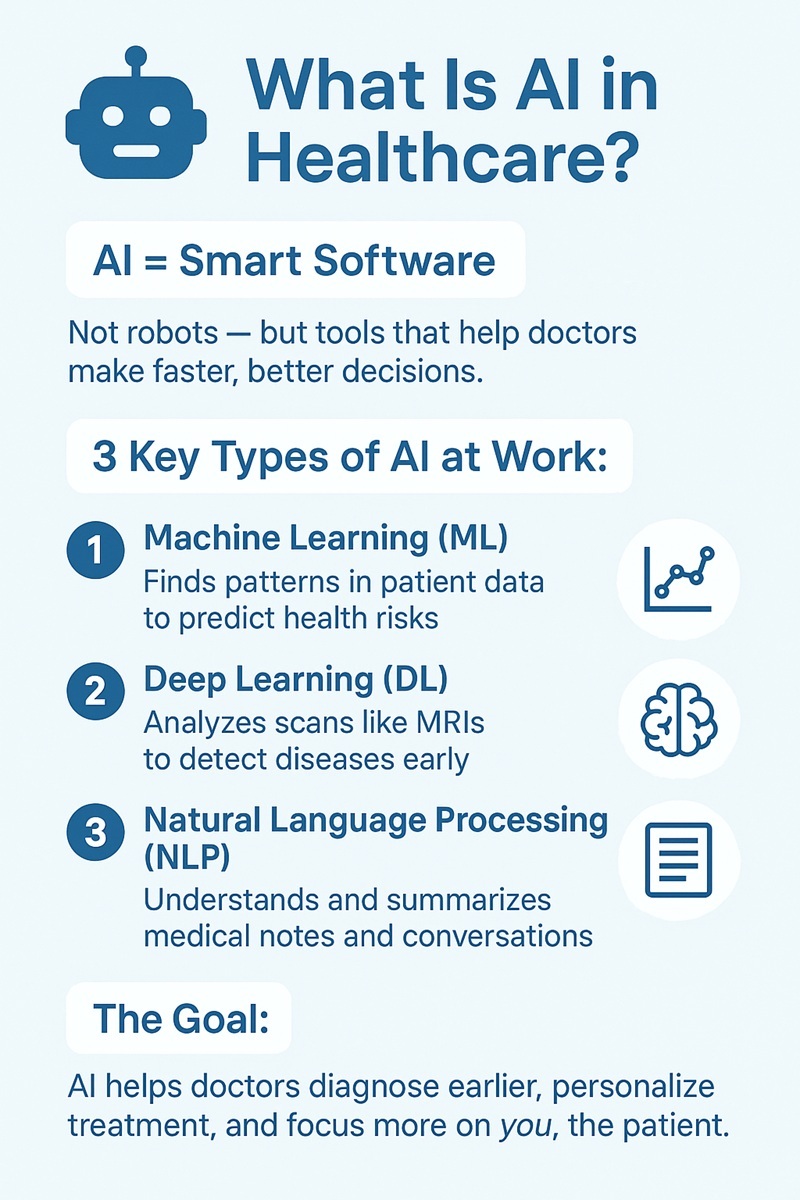
Download the above infographic in PDF
Before we dive into the life-saving applications, let’s quickly understand what “AI” really means in a medical setting.
Forget the Hollywood image of conscious robots. In healthcare, AI is essentially smart software. Think of it as a brilliant student that can read a billion books in a second, find hidden patterns, and never get tired. This software is trained on vast amounts of medical data—like millions of X-rays, patient records, and research papers.
By analyzing this data, the AI learns to recognize patterns that might be invisible to the human eye. It’s a “super-assistant” that helps doctors make faster, more informed decisions.
The Key Types of AI at Work
Three main types of AI are the workhorses behind this revolution.
1. Machine Learning (ML): The Pattern Finder
Machine Learning is the most common form of AI. Its job is to learn from data without being explicitly programmed for every single task.
- Simple Analogy: Imagine you want to teach a computer to recognize a cat. You don’t write code describing “pointy ears” or “whiskers.” Instead, you show it thousands of pictures of cats. Eventually, it learns the patterns and can identify a cat it has never seen before.
- In Healthcare: Doctors use ML to predict health risks. They feed the AI data from thousands of patients—things like blood pressure, cholesterol levels, age, and lifestyle habits. The AI learns the patterns that lead to a heart attack. It can then look at a new patient’s data and calculate their risk with incredible accuracy.
2. Deep Learning (DL): The Advanced Analyst
Deep Learning is a more advanced, powerful type of Machine Learning. It uses complex structures called “neural networks,” which are loosely modeled on the human brain. This allows it to analyze very complex types of data, like images.
- Simple Analogy: If Machine Learning is like a student learning flashcards, Deep Learning is like a seasoned detective who can see subtle clues and connect them in complex ways.
- In Healthcare: This is the magic behind AI-powered medical imaging. A deep learning model can analyze an MRI scan of a brain and spot the earliest, most subtle signs of a tumor—sometimes so small that a human radiologist might miss it on a busy day.
3. Natural Language Processing (NLP): The Language Understander
Natural Language Processing gives computers the ability to understand human language, both written and spoken.
- Simple Analogy: Think of Amazon’s Alexa or Apple’s Siri. They understand your commands and can talk back to you. NLP is the technology that makes this possible.
- In Healthcare: Doctors spend hours writing notes and updating patient records. NLP can “listen” to a doctor-patient conversation, automatically transcribe it, and pull out the most important information (symptoms, diagnoses, prescriptions) to update the patient’s electronic health record. This frees up the doctor to focus on the patient, not the keyboard.
Now that we have the basics, let’s see how these technologies are actively saving lives.
The Revolution in Diagnosis: Seeing the Unseen
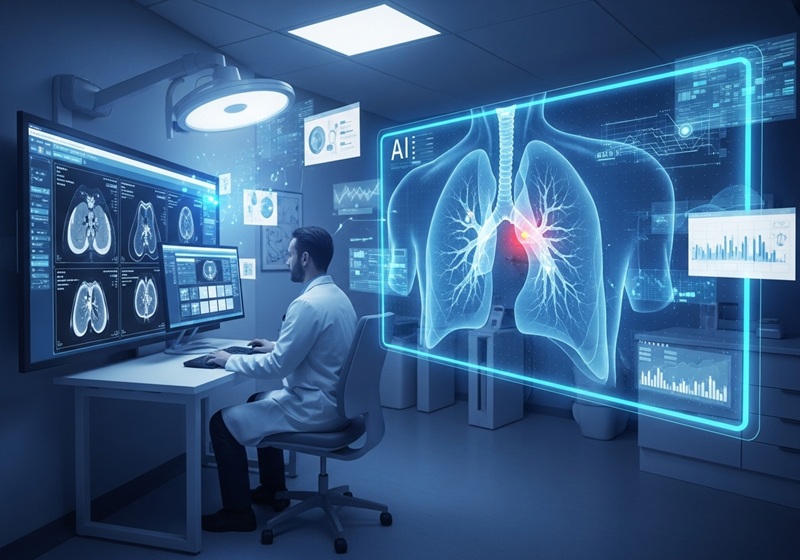
The single most important factor in surviving many diseases is catching them early. This is where AI is making its biggest and most immediate impact. It’s giving doctors a “magnifying glass” to see diseases sooner and with more accuracy than ever before.
Faster, More Accurate Medical Imaging
Radiologists are some of the unsung heroes of medicine. They spend their days looking at hundreds of complex images—X-rays, CT scans, and MRIs—searching for signs of disease. It’s a high-pressure job where a tiny, overlooked spot could change a patient’s life.
AI is now their second pair of eyes. And these eyes are tireless.
- The Problem: A radiologist might have just a few minutes to review a complex scan among a huge pile of cases. Fatigue is a real factor.
- The AI Solution: An AI algorithm, trained on millions of scans, can review an image in seconds. It can flag suspicious areas for the radiologist to review more closely. The AI doesn’t make the final call—the human expert does. But it acts as an incredibly effective safety net.
Example in Action: Detecting Lung Cancer
A chest X-ray is taken to investigate a patient’s cough. The AI scans the image and immediately highlights a tiny, faint nodule in the lung—a potential early-stage cancer. The radiologist, alerted by the AI, takes a closer look and confirms the finding. Because it was caught so early, the patient’s treatment is simpler and their chance of survival skyrockets. Without the AI, that tiny spot might have been missed until it grew much larger and more dangerous.
Here’s a simple breakdown of how AI changes the game:
| Process | Traditional Diagnosis | AI-Assisted Diagnosis |
|---|---|---|
| Speed | Can take hours or days for a radiologist to review non-urgent scans. | AI can analyze a scan in seconds or minutes. |
| Accuracy | Highly dependent on the individual radiologist’s experience and workload. | AI provides a consistent, data-driven “second opinion,” reducing human error. |
| Prioritization | Scans are often reviewed in the order they come in. | AI can triage cases, pushing the most critical-looking scans to the top of the pile. |
| Outcome | Potential for missed findings due to fatigue or high volume. | Higher likelihood of catching subtle or early-stage diseases, leading to better outcomes. |
Early Cancer Detection
Cancer is a word that strikes fear in all of us. But the earlier it’s found, the more treatable it is. AI is pushing the boundaries of early detection across multiple types of cancer.
- Breast Cancer: Mammograms save lives, but reading them can be tricky. Dense breast tissue can hide tumors. AI algorithms are now FDA-approved to help radiologists spot suspicious lumps on mammograms with greater accuracy, reducing both missed cancers and false alarms that cause unnecessary anxiety and biopsies.
- Skin Cancer: Imagine taking a photo of a mole on your phone and getting an instant risk assessment. AI-powered apps are moving in this direction. Dermatologists are using AI that has been trained on hundreds of thousands of images of skin lesions. The AI can analyze a photo of a mole and determine its likelihood of being melanoma, helping doctors decide which spots need a closer look.
- Pancreatic Cancer: This is one of the deadliest cancers because it’s usually found too late. Researchers have developed an AI that can detect early signs of pancreatic cancer on CT scans up to three years before it would typically be diagnosed. The AI sees subtle texture changes in the pancreas that are virtually invisible to the human eye.
Predicting Disease Before It Strikes
What if we could move beyond just diagnosing disease and actually predict it? This is the next frontier, and AI is leading the charge.
By analyzing a person’s entire health profile—their genetics, lab results, lifestyle, and even data from their smartwatch—AI can build a predictive model of their future health.
Example in Action: Preventing Heart Attacks
A 55-year-old man feels fine, but his doctor runs his data through an AI-powered risk calculator. The AI analyzes his cholesterol, blood pressure, family history, and even the subtle rhythm patterns from his ECG. It flags him as being at high risk for a major cardiac event in the next five years, even though his current symptoms are minimal. Armed with this knowledge, his doctor can start aggressive preventative care—like statins and lifestyle changes—to stop the heart attack before it ever happens. This is the ultimate form of life-saving: preventing the disaster altogether.
Transforming Treatment: Personalized and Precise
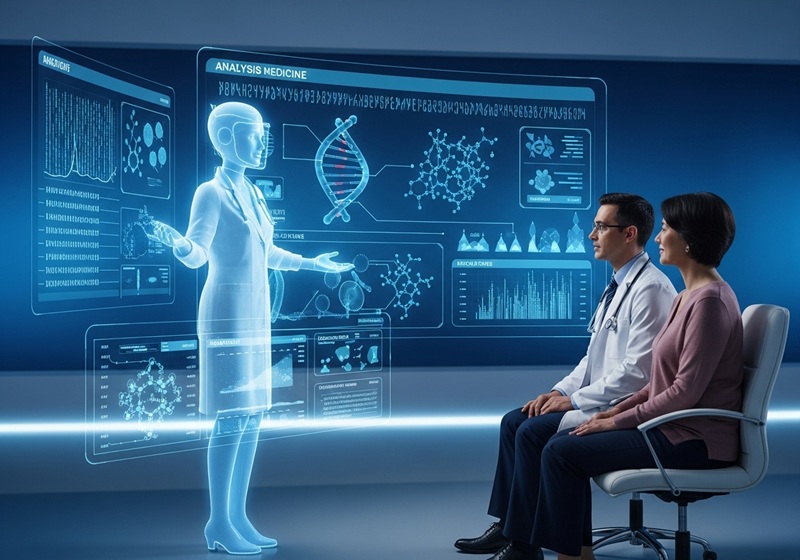
For decades, medicine often relied on a “one-size-fits-all” approach. If you had a certain type of cancer, you got a standard chemotherapy regimen. But we now know that every person—and every disease—is unique.
AI is ushering in the era of personalized medicine, where treatments are tailored to your specific body and your specific illness.
Tailored Treatment Plans
Your DNA holds the blueprint for your body. It also holds clues about which diseases you’re susceptible to and which treatments will work best for you. Analyzing this complex genetic code is a monumental task for a human, but it’s a perfect job for AI.
- Oncology (Cancer Treatment): Two people can have “lung cancer,” but on a genetic level, their tumors can be completely different. An AI can analyze the genetic sequence of a patient’s tumor and compare it to a massive database of other tumors and their responses to various drugs.
- The Result: Instead of starting with a standard chemo, the AI might recommend a targeted therapy drug that is known to work on tumors with that exact genetic mutation. This leads to more effective treatment with fewer side effects. It’s the difference between using a general-purpose key and a key cut specifically for one lock.
Example in Action: Choosing the Right Drug
A patient is diagnosed with metastatic melanoma. Traditionally, they would be given a powerful but grueling immunotherapy. Instead, their tumor is genetically sequenced. An AI model analyzes the data and finds a rare mutation. The AI’s database shows that a lesser-known targeted drug is highly effective against this specific mutation. The patient receives this drug, the tumor shrinks dramatically, and they avoid the harsh side effects of the standard treatment.
Speeding Up Drug Discovery and Development
Creating a new drug is an incredibly slow and expensive process. It can take over a decade and cost billions of dollars. Scientists have to test thousands of chemical compounds to find just one that works.
AI is drastically changing this equation.
- How it Works: AI can simulate how millions of different molecules will interact with the proteins that cause a disease. Instead of spending years in a wet lab physically testing each compound, researchers can use AI to identify the most promising candidates in a matter of weeks.
- The Impact: This massively accelerates the first phase of drug discovery. It allows pharmaceutical companies to focus their resources on the drugs that are most likely to succeed, getting life-saving medications to patients years faster.
The development of COVID-19 vaccines is a prime example. While many factors contributed to the record-breaking speed, AI played a crucial role in analyzing the virus’s genetic code and modeling potential vaccine candidates.
The Rise of Robot-Assisted Surgery
The word “robot surgeon” might sound scary, but the reality is much more reassuring. In robot-assisted surgery, a human surgeon is always in 100% control. The robot is a tool—an incredibly precise extension of the surgeon’s hands.
AI is now making these tools even smarter.
- How it Works: Systems like the da Vinci surgical robot allow surgeons to perform complex procedures through tiny incisions. The surgeon sits at a console and controls the robot’s arms. AI enhances this process by:
- Stabilizing movements: It filters out any natural hand tremors, making the surgeon’s cuts incredibly steady.
- Providing a 3D map: AI can overlay MRI or CT scan data onto the live video feed from inside the body, giving the surgeon “X-ray vision” to see nerves and blood vessels to avoid.
- Guiding the instruments: Based on thousands of past surgeries, the AI can suggest the safest path for an instrument or a suture.
The benefits are immense: smaller scars, less bleeding, less pain, and much faster recovery times for patients.
Streamlining Hospital Operations: The Unsung Hero
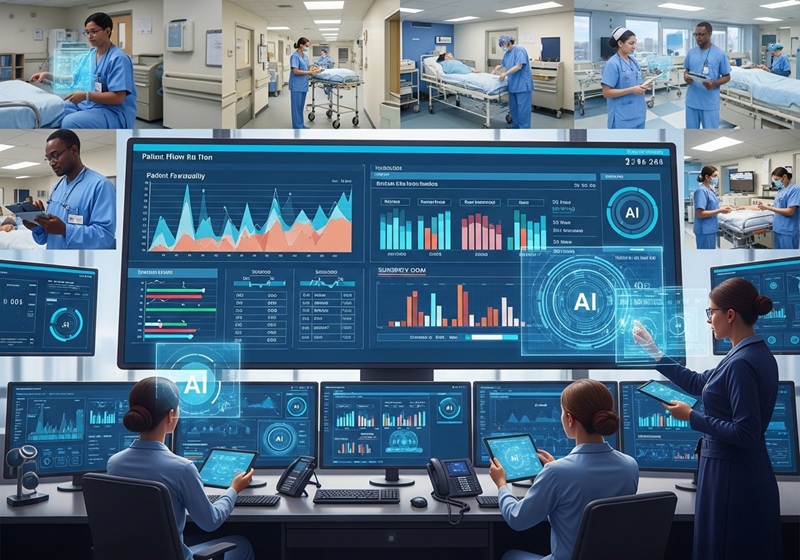
Saving lives isn’t just about breakthrough surgeries and miracle drugs. It’s also about making sure a hospital runs like a well-oiled machine. Inefficient scheduling, long wait times, and administrative overload can all have negative impacts on patient care.
AI is the behind-the-scenes hero that is fixing these problems.
Smarter Scheduling and Patient Flow
Ever spent hours in an emergency room waiting to be seen? Or had a surgery postponed because no beds were available? These are problems of logistics, and AI is a master of logistics.
Hospitals are now using AI to:
- Predict Admissions: By analyzing data from the community (like flu trends) and incoming patient data, AI can predict how busy the ER will be on a given day. This allows the hospital to staff up accordingly.
- Optimize Surgery Schedules: AI can juggle the complex schedules of surgeons, operating rooms, and equipment to maximize efficiency and reduce cancellations.
- Manage Bed Availability: An AI system can track every bed in the hospital in real-time. It knows when a patient is likely to be discharged, allowing it to prepare the room for the next patient seamlessly. This reduces wait times and gets patients into a bed faster.
Reducing Administrative Burnout
One of the biggest complaints from modern doctors is that they spend more time on paperwork than with patients. This administrative burden is a leading cause of burnout.
AI, particularly Natural Language Processing (NLP), is coming to the rescue.
- Voice-to-Text Transcription: Instead of typing up notes after every visit, a doctor can simply have a conversation with a patient. An NLP tool can listen in, transcribe the entire conversation, and identify the key medical information.
- Automated Record-Keeping: The AI can then take that transcribed information and automatically populate the patient’s electronic health record (EHR). It can update the problem list, add new prescriptions, and schedule a follow-up visit, all without the doctor having to type a thing.
This technology gives doctors back their most precious resource: time. Time to think, time to connect with patients, and time to provide compassionate, human-centered care.
Empowering Patients: AI in Your Pocket
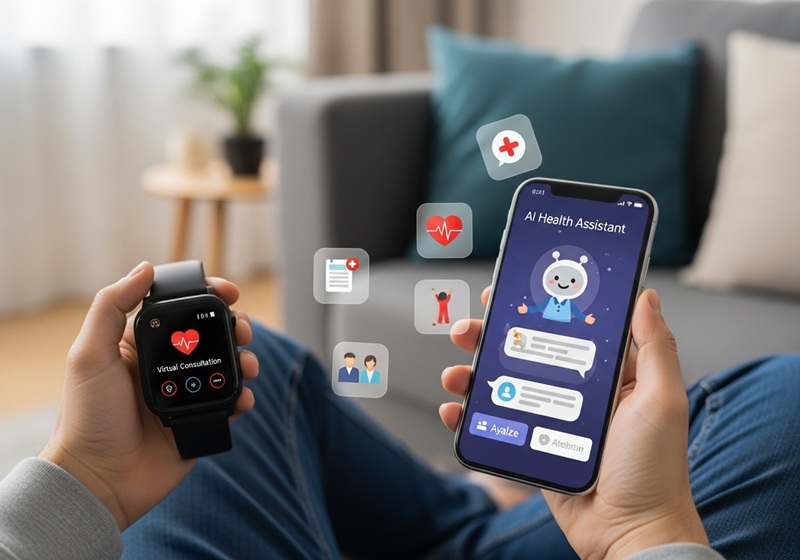
AI isn’t just for doctors and hospitals. It’s also making its way directly into the hands of patients, empowering us to take more control over our own health.
Virtual Health Assistants and Chatbots
Have a simple health question in the middle of the night? Instead of searching online and falling down a rabbit hole of misinformation, you can now turn to an AI-powered chatbot.
These bots, available through hospital websites or apps, can:
- Help you check your symptoms and suggest whether you need to see a doctor.
- Answer questions about your medication.
- Help you schedule an appointment.
- Provide basic health information from reliable sources.
These chatbots free up nurses and call centers from answering routine questions, allowing them to focus on more complex patient needs.
Wearable Tech and Remote Monitoring
The smartwatch on your wrist is more than just a fitness tracker; it’s a powerful health monitor. Devices like the Apple Watch and Fitbit use sensors and AI to track your health 24/7.
Example in Action: Preventing a Stroke
An AI algorithm in an Apple Watch can monitor the wearer’s heart rhythm. It can detect the signs of Atrial Fibrillation (AFib), a type of irregular heartbeat that dramatically increases the risk of stroke. If the watch detects AFib, it sends an alert to the user, prompting them to see a doctor.
This is a game-changer. AFib often has no symptoms, so millions of people don’t know they have it. A simple wearable device can now serve as an early warning system, catching the condition before it leads to a life-threatening stroke. This is AI saving lives while you sleep.
The Challenges and Ethical Questions: A Reality Check
As exciting as this technology is, we can’t ignore the serious challenges and ethical questions it raises. A balanced conversation about AI in healthcare must include a reality check.
Data Privacy and Security
AI models are hungry for data. To be effective, they need access to millions of patient records. This raises a huge red flag for privacy. How can we ensure that this sensitive health information is kept anonymous and secure from hackers? Building trust with the public is essential, and that requires robust, transparent security measures.
The Problem of Bias
An AI is only as good as the data it’s trained on. If the data is biased, the AI’s decisions will be biased, too.
- Example of Bias: Imagine an AI designed to detect skin cancer is trained mostly on images of light-skinned individuals. That AI may be far less accurate at detecting cancer on darker skin tones. This could create a dangerous health disparity where the technology works for some populations but not for others.
- The Solution: It is critical to train AI on diverse, representative datasets. Developers must actively work to identify and eliminate bias to ensure AI-driven healthcare is fair and equitable for everyone.
Regulation and Accountability
This is a huge legal and ethical question: If an AI makes a mistake in a diagnosis that leads to harm, who is responsible?
- Is it the doctor who trusted the AI’s recommendation?
- Is it the hospital that bought the software?
- Is it the company that developed the AI?
Governments and regulatory bodies like the FDA are working to create clear guidelines, but this is a complex area. We need a framework for accountability to ensure patient safety.
The Human Touch in Medicine
Finally, we must never forget that medicine is fundamentally human. A computer can analyze data, but it can’t hold a patient’s hand. It can’t show empathy. It can’t understand the fear and anxiety that comes with a diagnosis.
The goal of AI in healthcare should never be to replace doctors. It should be to augment them—to handle the data-heavy, repetitive tasks so that doctors can spend more time doing the things only a human can do: listening, comforting, and building a trusting relationship with their patients.
The Future of AI in Healthcare: What’s Next?
We are only at the beginning of this journey. The future of AI in healthcare promises even more incredible advancements.
- Digital Twins: Imagine a complete virtual model of your body—a “digital twin”—that is constantly updated with your health data. Doctors could test treatments and surgical procedures on your digital twin first to see how your body would react, finding the perfect approach before ever touching you.
- Population Health Prediction: AI will be able to analyze data on a massive scale to predict disease outbreaks. It could spot a new flu strain emerging in a specific city, allowing public health officials to act quickly to contain it.
- AI-Powered Mental Health: AI chatbots and virtual therapists will become more sophisticated, providing accessible, 24/7 support for people struggling with anxiety, depression, and other mental health conditions.
- Fully Integrated Systems: Your wearable device, your electronic health record, your pharmacy, and your hospital will all be connected through a smart AI system, creating a seamless and proactive healthcare experience.
Conclusion
Artificial Intelligence is not a magic bullet that will solve every problem in medicine. It is a tool—but it is arguably the most powerful tool we have ever had.
By making diagnosis faster and more accurate, by personalizing treatments to our unique biology, and by streamlining the way our hospitals run, AI is already saving lives every single day. It’s finding cancer sooner, stopping heart attacks before they happen, and accelerating the search for tomorrow’s cures.
The best part is that this revolution isn’t about cold machines taking over. It’s about empowering our dedicated doctors, nurses, and researchers. It’s about freeing them from the burden of data overload so they can focus on what truly matters: you, the patient.
The future of medicine is a partnership between human compassion and artificial intelligence. And together, they are building a healthier, more hopeful world for all of us.


Comments (No)